
Do you want to read a book “based on a true story” or do you want to know what really happened? Check out these reads where truth may be stranger than fiction. Curated by Jessica Schiefelbein
Looking for digital? Check for eBooks and eAudiobooks here.
cloudLibrary | Libby | Freading
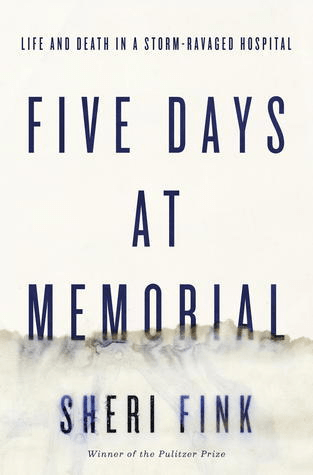
Five Days at Memorial by Sheri Fink
In the tradition of the best investigative journalism, physician and reporter Sheri Fink reconstructs 5 days at Memorial Medical Center and draws the reader into the lives of those who struggled mightily to survive and to maintain life amid chaos.
After Katrina struck and the floodwaters rose, the power failed, and the heat climbed, exhausted caregivers chose to designate certain patients last for rescue. Months later, several health professionals faced criminal allegations that they deliberately injected numerous patients with drugs to hasten their deaths.
Five Days at Memorial, the culmination of six years of reporting, unspools the mystery of what happened in those days, bringing the reader into a hospital fighting for its life and into a conversation about the most terrifying form of health care rationing.
In a voice at once involving and fair, masterful and intimate, Fink exposes the hidden dilemmas of end-of-life care and reveals just how ill-prepared we are in America for the impact of large-scale disasters—and how we can do better. A remarkable book, engrossing from start to finish, Five Days at Memorial radically transforms your understanding of human nature in crisis.
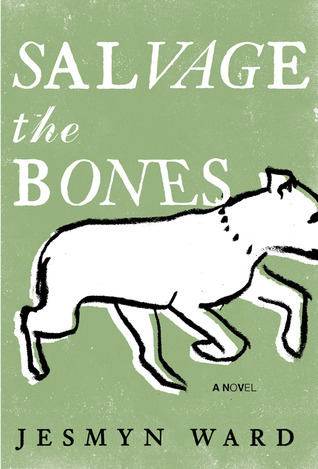
Salvage the Bones by Jesmyn Ward
A hurricane is building over the Gulf of Mexico, threatening the coastal town of Bois Sauvage, Mississippi, and Esch’s father is growing concerned. A hard drinker, largely absent, he doesn’t show concern for much else. Esch and her three brothers are stocking food, but there isn’t much to save. Lately, Esch can’t keep down what food she gets; she’s fourteen and pregnant. Her brother Skeetah is sneaking scraps for his prized pitbull’s new litter, dying one by one in the dirt, while brothers Randall and Junior try to stake their claim in a family long on child’s play and short on parenting. As the twelve days that comprise the novel’s framework yield to the final day and Hurricane Katrina, the unforgettable family at the novel’s heart—motherless children sacrificing for each other as they can, protecting and nurturing where love is scarce—pulls itself up to struggle for another day. A wrenching look at the lonesome, brutal, and restrictive realities of rural poverty, “Salvage the Bones” is muscled with poetry, revelatory, and real.
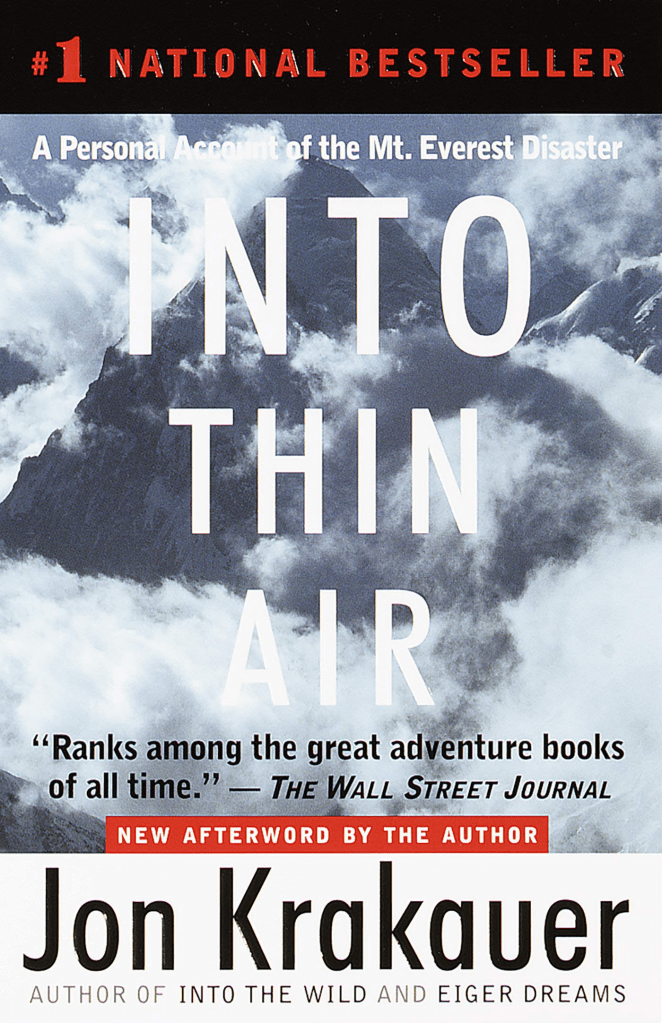
Into Thin Air by Jon Krakauer
When Jon Krakauer reached the summit of Mt. Everest in the early afternoon of May 10, 1996, he hadn’t slept in fifty-seven hours and was reeling from the brain-altering effects of oxygen depletion. As he turned to begin his long, dangerous descent from 29,028 feet, twenty other climbers were still pushing doggedly toward the top. No one had noticed that the sky had begun to fill with clouds. Six hours later and 3,000 feet lower, in 70-knot winds and blinding snow, Krakauer collapsed in his tent, freezing, hallucinating from exhaustion and hypoxia, but safe. The following morning, he learned that six of his fellow climbers hadn’t made it back to their camp and were desperately struggling for their lives. When the storm finally passed, five of them would be dead, and the sixth so horribly frostbitten that his right hand would have to be amputated.
Into Thin Air is the definitive account of the deadliest season in the history of Everest by the acclaimed journalist and author of the bestseller Into the Wild. On assignment for Outside Magazine to report on the growing commercialization of the mountain, Krakauer, an accomplished climber, went to the Himalayas as a client of Rob Hall, the most respected high-altitude guide in the world. A rangy, thirty-five-year-old New Zealander, Hall had summited Everest four times between 1990 and 1995 and had led thirty-nine climbers to the top. Ascending the mountain in close proximity to Hall’s team was a guided expedition led by Scott Fischer, a forty-year-old American with legendary strength and drive who had climbed the peak without supplemental oxygen in 1994. But neither Hall nor Fischer survived the rogue storm that struck in May 1996.
Krakauer examines what it is about Everest that has compelled so many people — including himself — to throw caution to the wind, ignore the concerns of loved ones, and willingly subject themselves to such risk, hardship, and expense. Written with emotional clarity and supported by his unimpeachable reporting, Krakauer’s eyewitness account of what happened on the roof of the world is a singular achievement.
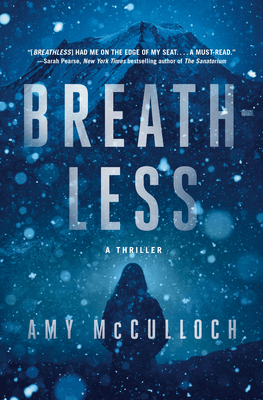
Breathless by Amy Mcculloch
A high-altitude thriller that will take your breath away—Cecily Wong is on her most dangerous climb yet, miles above sea level. But the elements are nothing compared to one chilling truth: There’s a killer on the mountain.
Journalist Cecily Wong is in over her head. She’s come to Manaslu, the eighth-highest peak in the world, to interview internationally famous mountaineer Charles McVeigh on the last leg of a record-breaking series of summits. She’s given up everything for this story—her boyfriend, her life savings, the peace she’s made with her climbing failures in the past—but it’s a career-making opportunity. It could finally put her life back on track.
But when one climber dies in what everyone else assumes is a freak accident, she fears their expedition is in danger. And by the time a second climber dies, it’s too late to turn back. Stranded on a mountain in one of the most remote regions of the world, she’ll have to battle more than the elements in a harrowing fight for survival against a killer who is picking them off one by one.
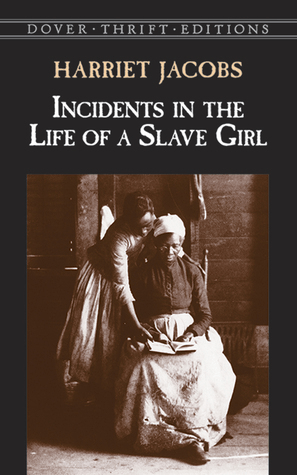
Incidents in the Life of a Slaved Girl by Harriet Jacobs
The true story of an individual’s struggle for self-identity, self-preservation, and freedom, Incidents in the Life of a Slave Girl remains among the few extant slave narratives written by a woman. This autobiographical account chronicles the remarkable odyssey of Harriet Jacobs (1813–1897) whose dauntless spirit and faith carried her from a life of servitude and degradation in North Carolina to liberty and reunion with her children in the North.
Written and published in 1861 after Jacobs’ harrowing escape from a vile and predatory master, the memoir delivers a powerful and unflinching portrayal of the abuses and hypocrisy of the master-slave relationship. Jacobs writes frankly of the horrors she suffered as a slave, her eventual escape after several unsuccessful attempts, and her seven years in self-imposed exile, hiding in a coffin-like “garret” attached to her grandmother’s porch.
A rare firsthand account of a courageous woman’s determination and endurance, this inspirational story also represents a valuable historical record of the continuing battle for freedom and the preservation of family.
The Underground Railroad by Colson Whitehead
Cora is a slave on a cotton plantation in Georgia. Life is hell for all the slaves, but especially bad for Cora; an outcast even among her fellow Africans, she is coming into womanhood–where even greater pain awaits. When Caesar, a recent arrival from Virginia, tells her about the Underground Railroad, they decide to take a terrifying risk and escape. Matters do not go as planned–Cora kills a young white boy who tries to capture her. Though they manage to find a station and head north, they are being hunted.
In Whitehead’s ingenious conception, the Underground Railroad is no mere metaphor–engineers and conductors operate a secret network of tracks and tunnels beneath the Southern soil. Cora and Caesar’s first stop is South Carolina, in a city that initially seems like a haven. But the city’s placid surface masks an insidious scheme designed for its black denizens. And even worse: Ridgeway, the relentless slave catcher, is close on their heels. Forced to flee again, Cora embarks on a harrowing flight, state by state, seeking true freedom.
Like the protagonist of Gulliver’s Travels, Cora encounters different worlds at each stage of her journey–hers is an odyssey through time as well as space. As Whitehead brilliantly re-creates the unique terrors for black people in the pre-Civil War era, his narrative seamlessly weaves the saga of America from the brutal importation of Africans to the unfulfilled promises of the present day. The Underground Railroad is at once a kinetic adventure tale of one woman’s ferocious will to escape the horrors of bondage and a shattering, powerful meditation on the history we all share.
American Sniper by Chris Kyle
From 1999 to 2009, U.S. Navy SEAL Chris Kyle recorded the most career sniper kills in United States military history. The Pentagon has officially confirmed more than 150 of Kyle’s kills (the previous American record was 109), but it has declined to verify the astonishing total number for this book. Iraqi insurgents feared Kyle so much they named him al-Shaitan (“the devil”) and placed a bounty on his head. Kyle earned legendary status among his fellow SEALs, Marines, and U.S. Army soldiers, whom he protected with deadly accuracy from rooftops and stealth positions. Gripping and unforgettable, Kyle’s masterful account of his extraordinary battlefield experiences ranks as one of the great war memoirs of all time.
A native Texan who learned to shoot on childhood hunting trips with his father, Kyle was a champion saddle-bronc rider prior to joining the Navy. After 9/11, he was thrust onto the front lines of the War on Terror, and soon found his calling as a world-class sniper who performed best under fire. He recorded a personal-record 2,100-yard kill shot outside Baghdad; in Fallujah, Kyle braved heavy fire to rescue a group of Marines trapped on a street; in Ramadi, he stared down insurgents with his pistol in close combat. Kyle talks honestly about the pain of war—of twice being shot and experiencing the tragic deaths of two close friends.
American Sniper also honors Kyles fellow warriors, who raised hell on and off the battlefield. And in moving first-person accounts throughout, Kyles wife, Taya, speaks openly about the strains of war on their marriage and children, as well as on Chris.
Adrenaline-charged and deeply personal, American Sniper is a thrilling eyewitness account of war that only one man could tell.
Point of Impact by Stephen Hunter
He was one the best Marine snipers in Vietnam. Today, twenty years later, disgruntled hero of an unheroic war, all Bob Lee Swagger wants to be left alone and to leave the killing behind.
But with consummate psychological skill, a shadowy military organization seduces Bob into leaving his beloved Arkansas hills for one last mission for his country, unaware until too late that the game is rigged.
The assassination plot is executed to perfection—until Bob Lee Swagger, alleged lone gunman, comes out of the operation alive, the target of a nationwide manhunt, his only allies a woman he just met and a discredited FBI agent.
Now Bob Lee Swagger is on the run, using his lethal skills once more—but this time to track down the men who set him up and to break a dark conspiracy aimed at the very heart of America.
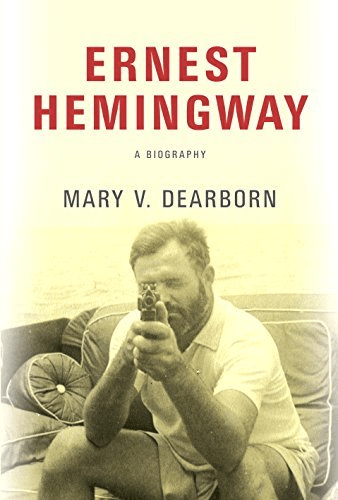
Ernest Hemingway by Mary V. Dearborn
The first full biography of Ernest Hemingway in more than fifteen years; the first to draw upon a wide array of never-before-used material; the first written by a woman, from the widely acclaimed biographer of Norman Mailer, Peggy Guggenheim, Henry Miller, and Louise Bryant. A revelatory look into the life and work of Ernest Hemingway, considered in his time to be the greatest living American novelist and short-story writer, winner of the 1953 Pulitzer Prize for Fiction and the Nobel Prize in Literature in 1954. Mary Dearborn’s new biography gives the richest and most nuanced portrait to date of this complex, enigmatically unique American artist, whose same uncontrollable demons that inspired and drove him throughout his life undid him at the end, and whose seven novels and six-short story collections informed–and are still informing–fiction writing generations after his death.

The Paris Wife by Paula McLain
Chicago, 1920: Hadley Richardson is a quiet twenty-eight-year-old who has all but given up on love and happiness—until she meets Ernest Hemingway and her life changes forever. Following a whirlwind courtship and wedding, the pair set sail for Paris, where they become the golden couple in a lively and volatile group—the fabled “Lost Generation”—that includes Gertrude Stein, Ezra Pound, and F. Scott and Zelda Fitzgerald.
 Shelf Analysis