

Get in the holiday spirit with some tunes on Freegal. Holiday songs continue to evolve, blending old traditions with fresh interpretations, ensuring they remain a cherished part of seasonal celebrations. Learn the history of these holiday songs from our database, EBSCOhost and books in our collection. Curated by Katie Rivers
Looking for streaming content? Check for Movies, TV shows, Music, Concerts, and more.
Kanopy | medici.tv | Freegal | The Shelf | cloudLibrary

History: Most of us can remember when the partridge in the pear tree arrived: straight from one’s own true love on the first day of Christmas. By the twelfth day, however, what with all those multiple rounds of dancing ladies, leaping lords, and piping pipers, memories get a little muddy. Which, claim some historians, is just as it should be. “The Twelve Days of Christmas,” that most challenging of Christmas carols, probably originated as a game song to be played at parties–most likely a game of forfeit, in which two opposing sides sang the verses back and forth in turns.
Rupp, Rebecca. 1996. “12 Days and 184 Birds.” Early American Homes 27 (4): 4. https://research.ebsco.com/linkprocessor/plink?id=d7ee5e22-b3b3-3e2a-9fe7-b5f35c48d09a.
Rudolph the Red Nosed Reindeer
History: Rudolph was born 85 years ago this Christmas season, at the Montgomery Ward department store headquarters in Chicago. He was the star of a humble coloring book, written by a copywriter, Robert May. After Bing Crosby turned down “Rudolph,” Gene Autry’s recording became an all time best seller. It sold almost two million copies in its first Christmas, in 1949.
Hodgman, Ann. 2014. “Reindeer Games.” Smithsonian 45 (8): 7–8. https://research.ebsco.com/linkprocessor/plink?id=ef82daf4-49fe-3821-a1dc-af4af4d6c097.
I Want A Hippopotamus For Christmas
History: Gayla Rienette Peevey, child singing star from Oklahoma City, is best known for recording the novelty song “I Want a Hippopotamus for Christmas” when she was 10 years old. The record peaked at number twenty-four on the Billboard Music Chart and sold more than three hundred thousand copies. The Oklahoma City Zoo capitalized on the song’s popularity. The zoo launched a fund-raising campaign to “buy a hippo for Gayla.” Area school children donated more than three thousand dollars, and a baby hippopotamus named Matilda was purchased and given to Gayla, which she donated to the zoo on December 23, 1953.
Zaleski, Annie. 2023. This Is Christmas, Song by Song: The Stories Behind 100 Holiday Hits. Running Press Adult.
Rockin’ Around the Christmas Tree
History: Brenda Lee, Country Music Hall-of-Famer & Rock and Roll Hall-of-Famer; world famous for “Rockin’ Around the Christmas tree;” the Beatles once opened for her. “I do “Rockin‘” all year long. I close my show with it. The first time I ever heard that song I knew it would be a hit. It just had that little spark of magic about it. I’ve garnered whole new audiences from that song being in movies like Home Alone.” – Brenda Lee
Williams, Paige. 2007. “Brenda Lee.” Atlanta 47 (8): 288. https://research.ebsco.com/linkprocessor/plink?id=00db11cf-579e-37c9-a1e7-c0854aa5d18c.
History: In early 1964, Theodor “Dr. Seuss” Geisel received a note from an old friend who wanted to discuss adapting a Dr. Seuss book into an animated cartoon. Geisel’s wife, Helen, became excited about the project and convinced Geisel to turn How the Grinch Stole Christmas into a film. Geisel was delighted to write songs for the Christmas-loving Whos and the Christmas-hating Grinch. It was the Grinch’s song, however that Geisel intended to be the showstopper. Seuss completed the Grinch’s song, “You’re a Mean One, Mr. Grinch,” a tour de force of over-the-top gross-out images – a bad banana with a greasy black peel, a dead tomato with moldy purple spots, a sauerkraut and toadstool sandwich – that made the Grinch seem even more deliciously nasty than he had in the book. With the addition of the Grinch’s song, the animated feature suddenly transcended its source material, giving the cartoon its own unique place in the Dr. Seuss oeuvre , beyond that of a mere adaptation.
Jones, Brian Jay. 2019. “HOW DR. SEUSS STOLE CHRISTMAS! The Making of the Classic Grinch Holiday Cartoon.” Saturday Evening Post 291 (6): 34–39. https://research.ebsco.com/linkprocessor/plink?id=acb4f755-8872-3253-9d4e-ea290b4445a9.

History: This song was the creation of Walter “Jack” Rollins and Steve Nelson, the songwriting team behind “Peter Cottontail.” Despite its snowy setting, “Frosty” was already being promoted in spring 1950. It lead to immediate success and sung by multiple artists reaching the top 10 on both country and pop music charts. The most familiar version is sung by Jimmy Durante and featured in the 1969 TV special.
Zaleski, Annie. 2023. This Is Christmas, Song by Song: The Stories Behind 100 Holiday Hits. Running Press Adult.
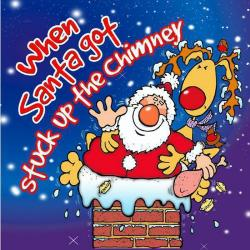
History: In 1958, an actor and singer named Ross Bagdasarian, recording under the name David Seville, had an unexpected pop smash with a quirky song called “Witch Doctor.” He spent $200 ($2,000 in 2023) on a reel-to-reel cassette recorder and started experimenting with tape manipulation, pitch-shifting his voice to create a cartoonish character that recited the song’s nursery rhyme-like chorus. Bagdasarian applied the same whimsical (and out-there) approach to “The Chipmunk Song.” He said he came up with a melody for the song first – because he couldn’t read or write music, he whistled the part into a tape recorder – and then wrote lyrics. After considering mice, rabbits, and even butterflies, he hit on the idea of having chipmunks be the singers. The song reached No. 1 on Billboards’s Hot 100 and Honor Roll of Hits in 1958. It also won three awards at the very first Grammy Awards. Alvin & the Chimpmunks would grow into and enduring pop culture phenomenon, encompassing singles and albums, movies, and a TV cartoon.
Zaleski, Annie. 2023. This Is Christmas, Song by Song: The Stories Behind 100 Holiday Hits. Running Press Adult.
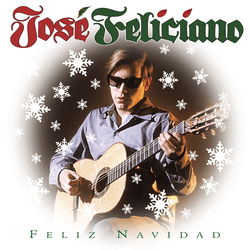
History: José Feliciano’s 1970 hit is a concise song that offers heartfelt “Merry Christmas!” greetings in both English and Spanish. The bilingual lyrics were by design – Feliciano knew this would give the song wider appeal, particularly on the radio – although he also wanted to capture an inclusive celebratory spirit. “My thought when I wrote the song was that it didn’t matter what language you were singing in,” he told the Associated Press in 2020. “The feeling of Christmas is privy to all of us.” Feliciano was missing his large family back in Puerto Rico – he had 10 brothers – and their annual Christman Eve celebration. This inspired him to write “Feliz Navidad.” The festive song has become one of the most popular holiday hits. In both 2021 and 2022, the original version of “Feliz Navidad” reached the top 10 of Billboard’s Hot 100.
Zaleski, Annie. 2023. This Is Christmas, Song by Song: The Stories Behind 100 Holiday Hits. Running Press Adult.
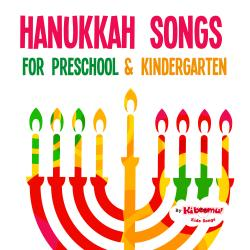
History: “I Have a Little Dreidel” is a children’s Hanukkah song in the English-speaking world that also exists in a Yiddish version. The song was written in 1927. The dreidel game is a gambling game where, after you ante up, the letter that comes up when you spin the top tells you what to do: take the whole pot, take half the pot, do nothing, or ante up again. It’s a fun way for kids to spend a few hours winning or losing chocolate coins.
Winick, Stephen. 2022. “The Truth Behind the Hanukkah Dreidel: Metafolklore, Play, and Spin | Folklife Today.” The Library of Congress. December 13, 2022. https://blogs.loc.gov/folklife/2022/12/the-truth-behind-the-hanukkah-dreidel-metafolklore-play-and-spin/.
 Shelf Analysis