
What is a mind, and how do we measure intelligence? Do humans have a monopoly on consciousness? These books take us beyond the human mind to explore the intelligence that arises throughout the natural world: in oaks and in octopuses, in mockingbirds and mushrooms, often hiding in plain sight. Curated by Ashley Lewis.
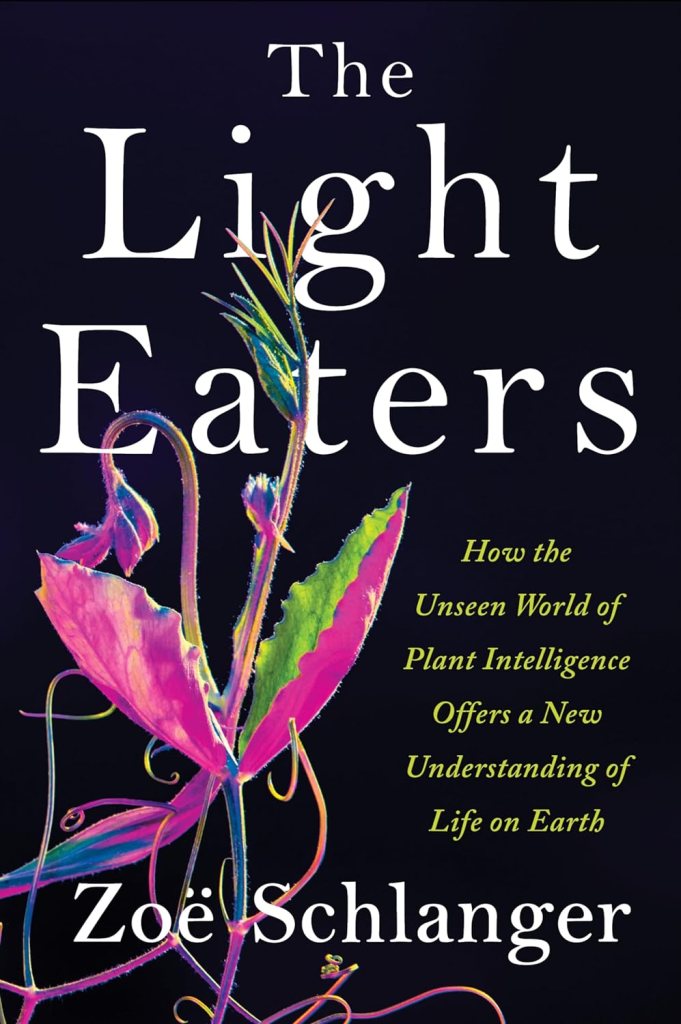
The Light Eaters by Zoë Schlanger
It takes tremendous biological creativity to be a plant. To survive and thrive while rooted in a single spot, plants have adapted ingenious methods of survival. In recent years, scientists have learned about their ability to communicate, recognize their kin and behave socially, hear sounds, morph their bodies to blend into their surroundings, store useful memories that inform their life cycle, and trick animals into behaving to their benefit, to name just a few remarkable talents.
The Light Eaters is a deep immersion into the drama of green life and the complexity of this wild and awe-inspiring world that challenges our very understanding of agency, consciousness, and intelligence. In looking closely, we see that plants, rather than imitate human intelligence, have perhaps formed a parallel system. What is intelligent life if not a vine that grows leaves to blend into the shrub on which it climbs, a flower that shapes its bloom to fit exactly the beak of its pollinator, a pea seedling that can hear water flowing and make its way toward it? Zoë Schlanger takes us across the globe, digging into her own memories and into the soil with the scientists who have spent their waking days studying these amazing entities up close.
What can we learn about life on Earth from the living things that thrive, adapt, consume, and accommodate simultaneously? More important, what do we owe these life forms once we come to understand their rich and varied abilities? Examining the latest epiphanies in botanical research, Schlanger spotlights the intellectual struggles among the researchers conceiving a wholly new view of their subject, offering a glimpse of a field in turmoil as plant scientists debate the tenets of ongoing discoveries and how they influence our understanding of what a plant is.
We need plants to survive. But what do they need us for—if at all? An eye-opening and informative look at the ecosystem we live in, this book challenges us to rethink the role of plants—and our own place—in the natural world.
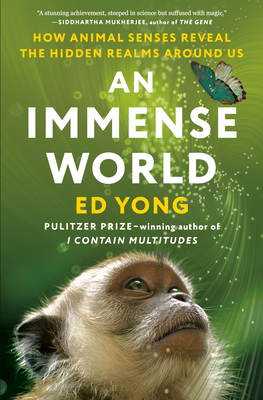
An Immense World by Ed Yong
The Earth teems with sights and textures, sounds and vibrations, smells and tastes, electric and magnetic fields. But every animal is enclosed within its own unique sensory bubble, perceiving but a tiny sliver of an immense world. This book welcomes us into a previously unfathomable dimension–the world as it is truly perceived by other animals.
We encounter beetles that are drawn to fires, turtles that can track the Earth’s magnetic fields, fish that fill rivers with electrical messages, and humans that wield sonar like bats. We discover that a crocodile’s scaly face is as sensitive as a lover’s fingertips, that the eyes of a giant squid evolved to see sparkling whales, that plants thrum with the inaudible songs of courting bugs, and that even simple scallops have complex vision. We learn what bees see in flowers, what songbirds hear in their tunes, and what dogs smell on the street. We listen to stories of pivotal discoveries in the field, while looking ahead at the many mysteries which lie unsolved.
In An Immense World, author and acclaimed science journalist Ed Yong coaxes us beyond the confines of our own senses, allowing us to perceive the skeins of scent, waves of electromagnetism, and pulses of pressure that surround us. Because in order to understand our world we don’t need to travel to other places; we need to see through other eyes.
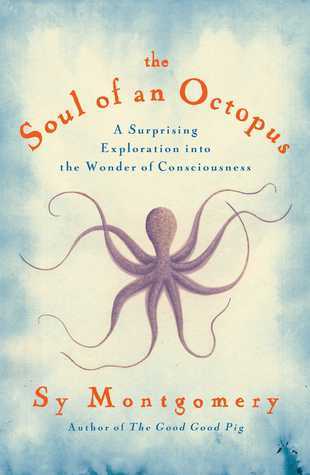
The Soul of an Octopus by Sy Montgomery
In pursuit of the wild, solitary, predatory octopus, popular naturalist Sy Montgomery has practiced true immersion journalism. From New England aquarium tanks to the reefs of French Polynesia and the Gulf of Mexico, she has befriended octopuses with strikingly different personalities—gentle Athena, assertive Octavia, curious Kali, and joyful Karma. Each creature shows her cleverness in myriad ways: escaping enclosures like an orangutan; jetting water to bounce balls; and endlessly tricking companions with multiple “sleights of hand” to get food.
Scientists have only recently accepted the intelligence of dogs, birds, and chimpanzees but now are watching octopuses solve problems and are trying to decipher the meaning of the animal’s color-changing techniques. With her “joyful passion for these intelligent and fascinating creatures” (Library Journal Editors’ Spring Pick), Montgomery chronicles the growing appreciation of this mollusk as she tells a unique love story. By turns funny, entertaining, touching, and profound, The Soul of an Octopus reveals what octopuses can teach us about the meeting of two very different minds.
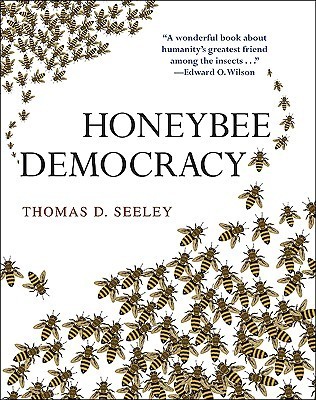
Honeybee Democracy by Thomas D. Seeley
Honeybees make decisions collectively–and democratically. Every year, faced with the life-or-death problem of choosing and traveling to a new home, honeybees stake everything on a process that includes collective fact-finding, vigorous debate, and consensus building. In fact, as world-renowned animal behaviorist Thomas Seeley reveals, these incredible insects have much to teach us when it comes to collective wisdom and effective decision making. A remarkable and richly illustrated account of scientific discovery, Honeybee Democracy brings together, for the first time, decades of Seeley’s pioneering research to tell the amazing story of house hunting and democratic debate among the honeybees.
In the late spring and early summer, as a bee colony becomes overcrowded, a third of the hive stays behind and rears a new queen, while a swarm of thousands departs with the old queen to produce a daughter colony. Seeley describes how these bees evaluate potential nest sites, advertise their discoveries to one another, engage in open deliberation, choose a final site, and navigate together–as a swirling cloud of bees–to their new home. Seeley investigates how evolution has honed the decision-making methods of honeybees over millions of years, and he considers similarities between the ways that bee swarms and primate brains process information. He concludes that what works well for bees can also work well for people: any decision-making group should consist of individuals with shared interests and mutual respect, a leader’s influence should be minimized, debate should be relied upon, diverse solutions should be sought, and the majority should be counted on for a dependable resolution.
An impressive exploration of animal behavior, Honeybee Democracy shows that decision-making groups, whether honeybee or human, can be smarter than even the smartest individuals in them.
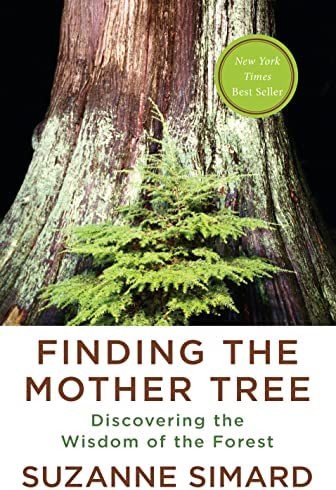
Finding the Mother Tree by Suzanne Simard
Suzanne Simard is a pioneer on the frontier of plant communication and intelligence; she’s been compared to Rachel Carson, hailed as a scientist who conveys complex, technical ideas in a way that is dazzling and profound. Her work has influenced filmmakers (the Tree of Souls of James Cameron’s Avatar) and her TED talks have been viewed by more than 10 million people worldwide.
Now, in her first book, Simard brings us into her world, the intimate world of the trees, in which she brilliantly illuminates the fascinating and vital truths–that trees are not simply the source of timber or pulp, but are a complex, interdependent circle of life; that forests are social, cooperative creatures connected through underground networks by which trees communicate their vitality and vulnerabilities with communal lives not that different from our own.
Simard writes–in inspiring, illuminating, and accessible ways–how trees, living side by side for hundreds of years, have evolved, how they perceive one another, learn and adapt their behaviors, recognize neighbors, and remember the past; how they have agency about the future; elicit warnings and mount defenses, compete and cooperate with one another with sophistication, characteristics ascribed to human intelligence, traits that are the essence of civil societies–and at the center of it all, the Mother Trees: the mysterious, powerful forces that connect and sustain the others that surround them.
Simard writes of her own life, born and raised into a logging world in the rainforests of British Columbia, of her days as a child spent cataloging the trees from the forest and how she came to love and respect them–embarking on a journey of discovery, and struggle. And as she writes of her scientific quest, she writes of her own journey–of love and loss, of observation and change, of risk and reward, making us understand how deeply human scientific inquiry exists beyond data and technology, that it is about understanding who we are and our place in the world, and, in writing of her own life, we come to see the true connectedness of the Mother Tree that nurtures the forest in the profound ways that families and human societies do, and how these inseparable bonds enable all our survival.
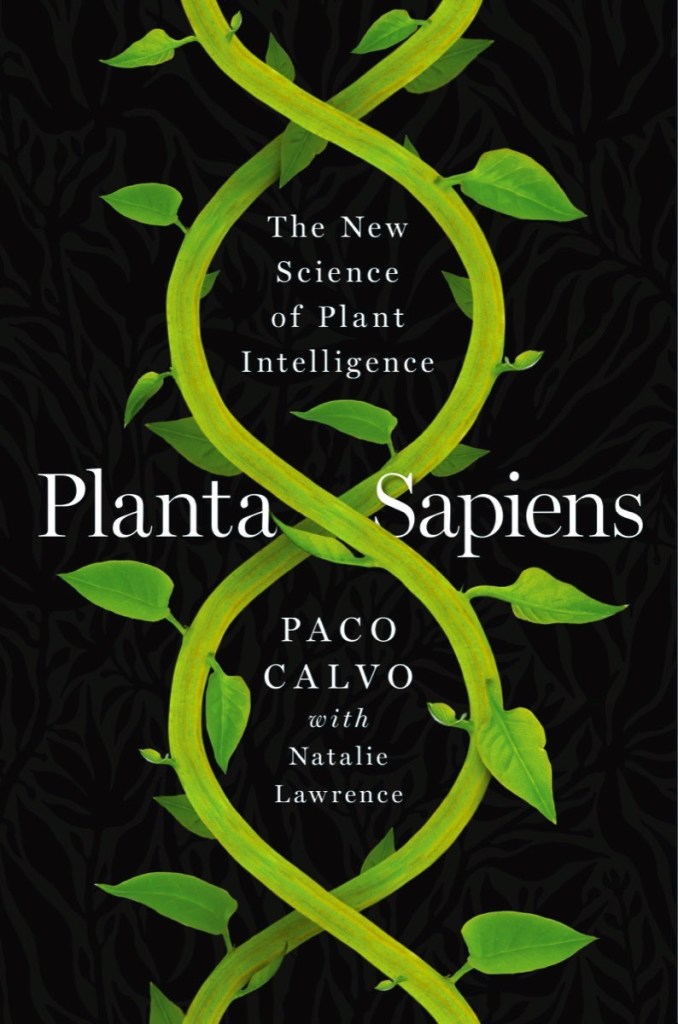
Planta Sapiens by Paco Calvo
Decades of research document plants’ impressive abilities: they communicate with each other, manipulate other species, and move in sophisticated ways. Lesser known, however, is that although plants may not have brains, their internal workings reveal a system not unlike the neuronal networks running through our own bodies. They can learn and remember, possessing an intelligence that allows them to behave in flexible, forward-looking, and goal-directed ways.
In Planta Sapiens, Paco Calvo, a leading figure in the philosophy of plant signaling and behavior, offers an entirely new perspective on plants’ worlds, showing for the first time how we can use tools developed to study animal cognition in a quest to understand plant intelligence. Plants learn from experience: wild strawberries can be taught to link light intensity with nutrient levels in the soil, and flowers can time pollen production to pollinator visits. Plants have social intelligence, releasing chemicals from their roots and leaves to speak to and identify one another. They make decisions about where to invest their growth, judging risk based on the resources available. Their individual preferences vary, too–plants have personalities.
Calvo also illuminates how plants inspire technological advancements, from robotics to AI. Most importantly, he demonstrates that plants are not objects: they have their own agency. If we recognize plants as actors alongside us in the climate crisis–rather than seeing them simply as resources for carbon capture and food production–plants may just be able to help us tackle our most urgent problems.
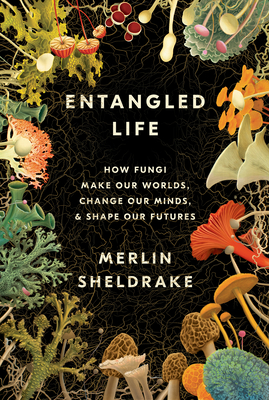
Entangled Life by Merlin Sheldrake
There is a lifeform so strange and wondrous that it forces us to rethink how life works…
Neither plant nor animal, it is found throughout the earth, the air and our bodies. It can be microscopic, yet also accounts for the largest organisms ever recorded, living for millennia and weighing tens of thousands of tons. Its ability to digest rock enabled the first life on land, it can survive unprotected in space and thrives amidst nuclear radiation.
In this captivating adventure, Merlin Sheldrake explores the spectacular and neglected world of fungi: endlessly surprising organisms that sustain nearly all living systems. They can solve problems without a brain, stretching traditional definitions of ‘intelligence’, and can manipulate animal behavior with devastating precision. In giving us bread, alcohol and life-saving medicines, fungi have shaped human history, and their psychedelic properties, which have influenced societies since antiquity, have recently been shown to alleviate a number of mental illnesses. The ability of fungi to digest plastic, explosives, pesticides and crude oil is being harnessed in breakthrough technologies, and the discovery that they connect plants in underground networks, the ‘Wood Wide Web’, is transforming the way we understand ecosystems. Yet they live their lives largely out of sight, and over ninety percent of their species remain undocumented.
Entangled Life is a mind-altering journey into this hidden kingdom of life, and shows that fungi are key to understanding the planet on which we live, and the ways we think, feel and behave. The more we learn about fungi, the less makes sense without them.
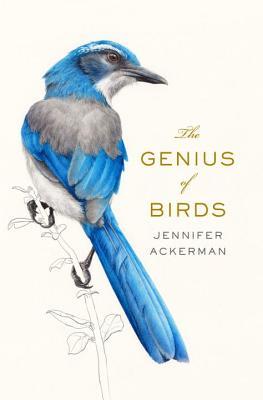
The Genius of Birds by Jennifer Ackerman
Birds are astonishingly intelligent creatures. According to revolutionary new research, some birds rival primates and even humans in their remarkable forms of intelligence. In The Genius of Birds, acclaimed author Jennifer Ackerman explores their newly discovered brilliance and how it came about.
As she travels around the world to the most cutting-edge frontiers of research, Ackerman not only tells the story of the recently uncovered genius of birds but also delves deeply into the latest findings about the bird brain itself that are shifting our view of what it means to be intelligent. At once personal yet scientific, richly informative and beautifully written, The Genius of Birds celebrates the triumphs of these surprising and fiercely intelligent creatures.
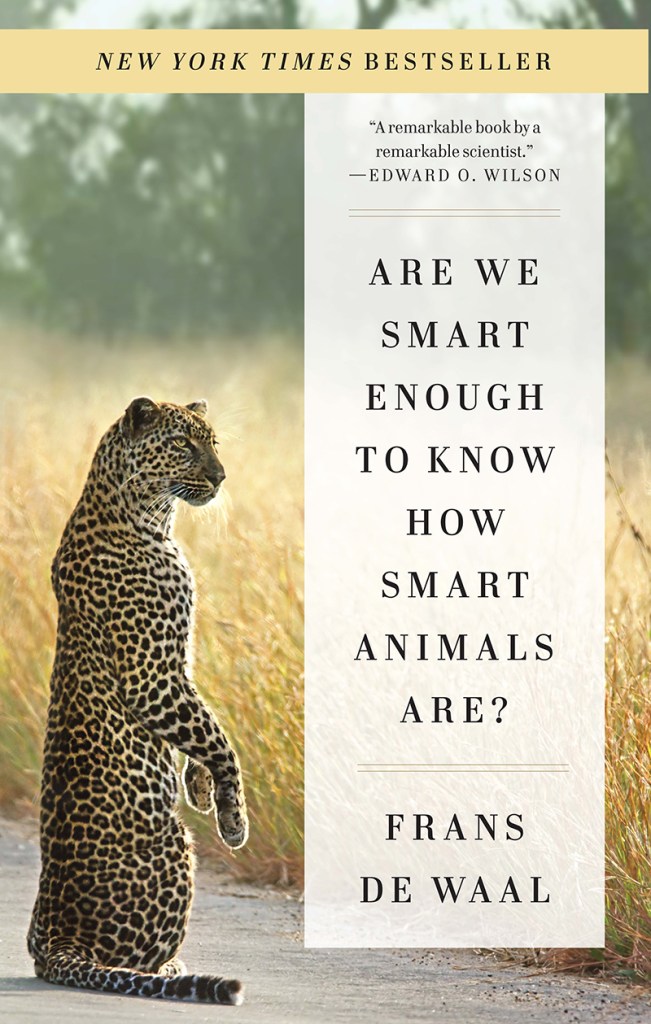
Are We Smart Enough to Know How Smart Animals Are? by Franz De Waal
What separates your mind from an animal’s? Maybe you think it’s your ability to design tools, your sense of self, or your grasp of past and future–all traits that have helped us define ourselves as the planet’s preeminent species. But in recent decades, these claims have eroded, or even been disproven outright, by a revolution in the study of animal cognition. Take the way octopuses use coconut shells as tools; elephants that classify humans by age, gender, and language; or Ayumu, the young male chimpanzee at Kyoto University whose flash memory puts that of humans to shame. Based on research involving crows, dolphins, parrots, sheep, wasps, bats, whales, and of course chimpanzees and bonobos, Frans de Waal explores both the scope and the depth of animal intelligence. He offers a firsthand account of how science has stood traditional behaviorism on its head by revealing how smart animals really are, and how we’ve underestimated their abilities for too long.
People often assume a cognitive ladder, from lower to higher forms, with our own intelligence at the top. But what if it is more like a bush, with cognition taking different forms that are often incomparable to ours? Would you presume yourself dumber than a squirrel because you’re less adept at recalling the locations of hundreds of buried acorns? Or would you judge your perception of your surroundings as more sophisticated than that of a echolocating bat? De Waal reviews the rise and fall of the mechanistic view of animals and opens our minds to the idea that animal minds are far more intricate and complex than we have assumed. De Waal’s landmark work will convince you to rethink everything you thought you knew about animal–and human–intelligence.
 Shelf Analysis